Bosy
2025-2026
Designing a Mobile & SaaS Platform for Schools
A mobile app that helps teachers manage classes, events and parent communication throughout the school day

Overview
Bosy is a school management platform for private schools and learning centres in Cyprus.
As the Founding Product Designer, I shaped the iOS and Android experience from discovery through branding, UX/UI and the design system.
This case study focuses on the teacher and student app, designed to make everyday school communication faster and easier
The problem
Keeping parents informed without creating more work for teachers
Teachers need to constantly update information during the day — attendance, activities, events, payments and student updates — while parents expect to stay informed.
The challenge was to make these frequent actions quick enough to fit naturally into a teacher’s day, without creating extra administrative work.
Research & Product Definition
I spoke with school owners and teachers to understand their daily routines, communication needs and the tasks they repeat most often.
This helped me prioritise the most important flows and design the product around frequency of use, keeping common actions within only a few steps.
Designs
Designing around frequency of use
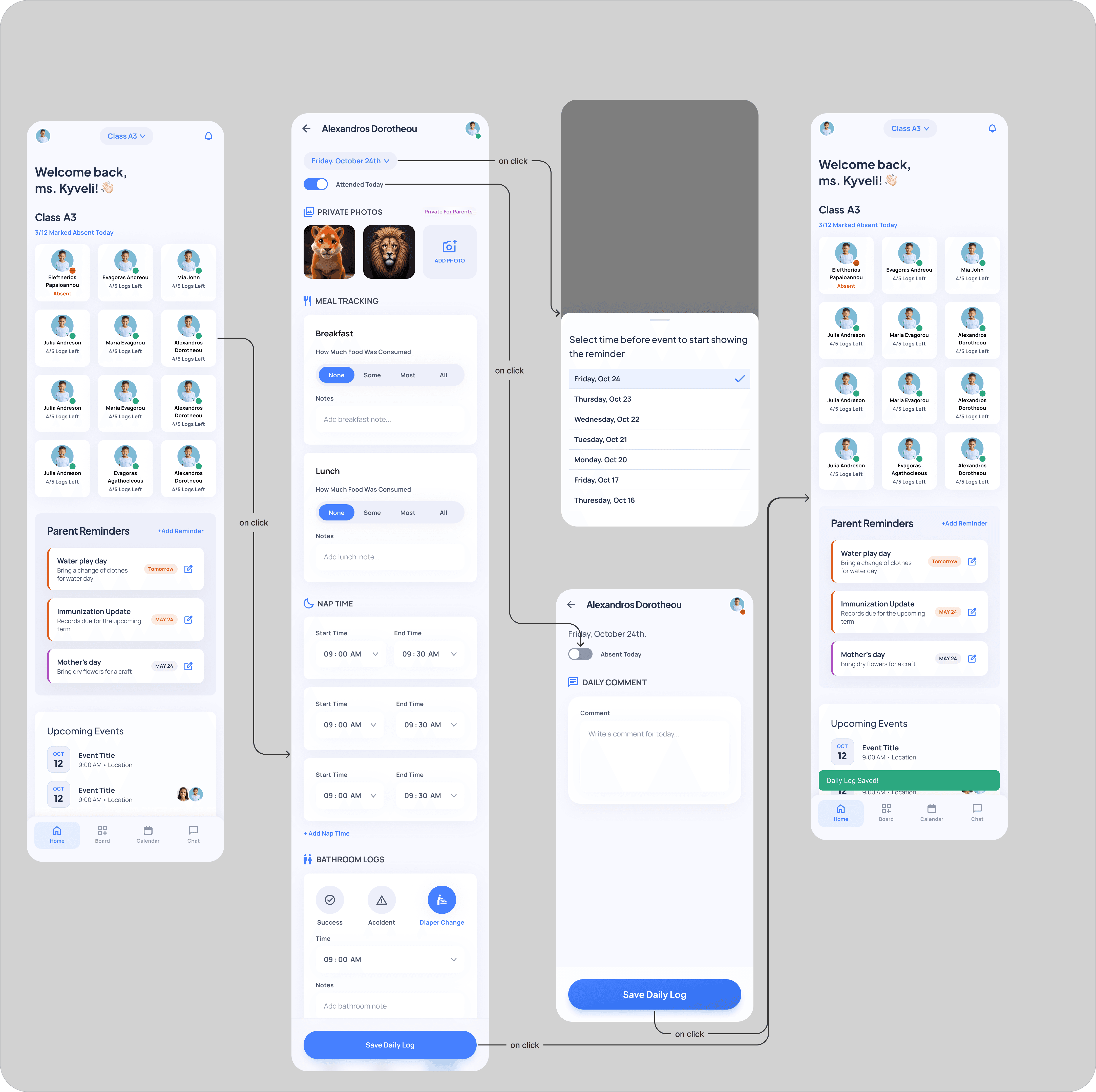
The teacher experience was designed for speed. Frequently repeated actions are surfaced directly from the main experience, with short flows and minimal data entry.
On the other side, the student experience brings together the information families need at a glance — upcoming activities, school updates, events and account information — creating a clearer connection between what happens at school and what parents see.
Creating the Bosy brand and design language
As the founding designer, I also defined the visual identity and UI language for Bosy.
I created a reusable component system that allowed new functionality to remain visually consistent while supporting different content types across the product.
Building an AI-native design workflow
Because Bosy is a part-time project, I needed a way to expand the product without making design production a bottleneck.
I structured the design system to work with AI-assisted design workflows, translating screens from manually organised frames into clearly named components, variables and patterns that AI could understand.
I first established the core components, interaction patterns and visual rules myself, then used Claude with MCP to generate new screens using the existing system.
After several iterations, the workflow can now produce new screens and feature concepts extremely quickly. Instead of spending most of my available time manually assembling interfaces, I can focus on product decisions, testing ideas with users and improving the experience based on feedback.
Impact & Lessons
The app received strong positive feedback from school owners and achieved over 70% conversion from trial schools to paying customers.
Bosy also taught me where AI adds the most value to the design process. I now automate repetitive production work such as assembling screens from established patterns, while keeping research, product decisions, UX judgement and user validation human-led.
This allowed me to move faster without losing the human understanding that makes the product useful.
